
UAV vs Drones: Complete Guide Technology, Types and Application
Technology is advancing at very fast pace, and some of exciting innovations are happening in the skies. Aerial technologies, specially Unmanned Aerial Vehicles (UAVs) and drones, are becoming powerful solutions for many industries. From capturing aerial photography, delivering packages to monitoring agricultural fields and assisting in military missions, these flying machines are reshaping the way we live and work.
But many have question, what exactly are UAVs and drones? Are they the same, or different. If different what are difference between them? And why we as a businesses, as a hobby, or and technical personnel should pay attention to this rapidly growing field?
In this blog post, we’ll explore the fundamentals, differences and real-world applications, where this fascinating technology is taking the future.
What Are UAVs and Drones?
To understand the difference we need to know these terms right. While often used interchangeably, UAVs and drones have different meanings.
UAV – Unmanned Aerial Vehicle, refers to an aircraft that operates without a human pilot on board. UAVs are typically controlled remotely or follow pre-defined flight paths using onboard systems. “UAV” term is often used in military, research, or industrial contexts where precision, autonomy, and mission complexity are high. UAVs as a system includes the an aircraft, ground control systems, onboard sensors, and communication link and known as UAS (Unmanned Aircraft System).
“Drone” term is a casual or consumer-friendly name to same type of flying device. Originally used to describe any remotely piloted vehicle in air, ground, or water. “Drone” now commonly refers to multirotor flying object used for photography, fun flying, or small-scale commercial applications. We can consider every drone technically a UAV, but not all UAVs are referred to as drones – especially in formal or defense talks.
Types of UAVs and Drones
There are many different types of UAVs and drones depending on their design, purpose, and flying capabilities. Here are the main categories:
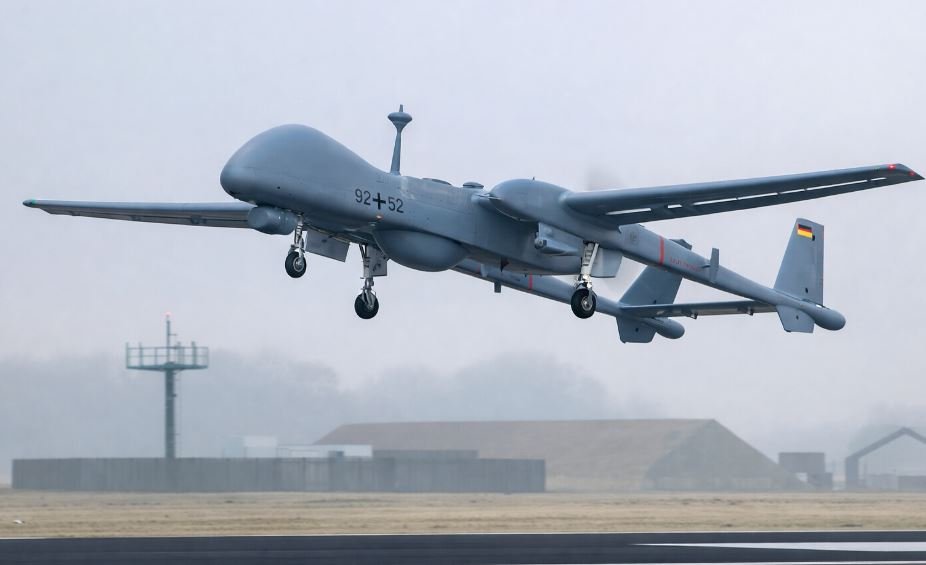
- Fixed-Wing UAV: A fixed-wing UAV looks similar to traditional aeroplanes. These can fly long distances and stay in the air for longer periods. These capability makes them suitable for large-area mapping, surveillance, and military use. They requires runways or a launch pad to take off and land.
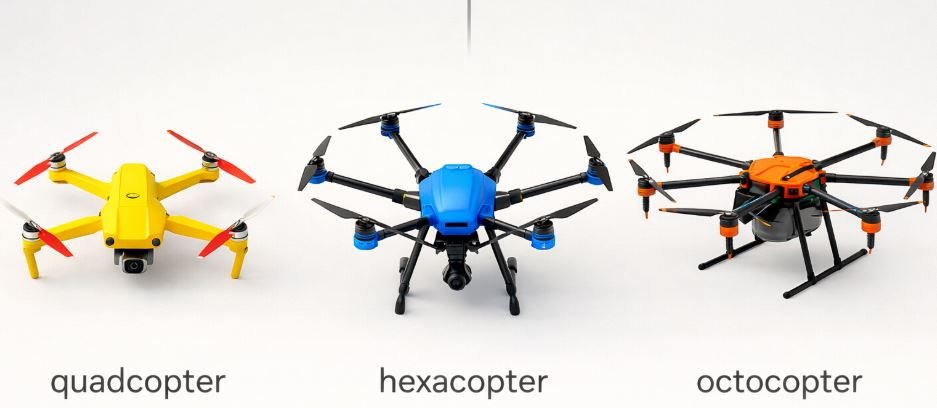
- Multirotor Drones: Most popular drones are multirotor types which includes quadcopters, hexacopters, and octocopters drones. These types of drone have ability to take off vertically, hover at a point and are easy to fly, which makes them perfect use for photography, videography, and inspection tasks. Their flight time is usually shorter compared to others.
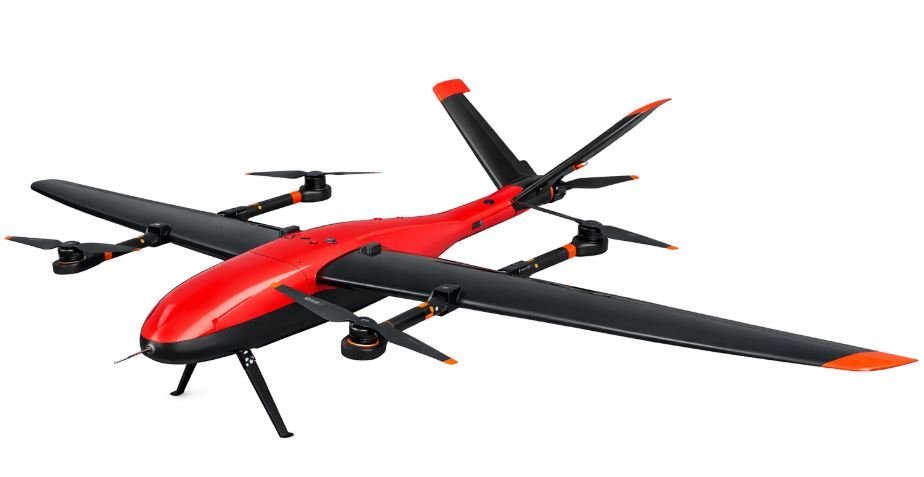
- VTOL (Vertical Take-Off and Landing) Drones: VTOL drones combine the features of both fixed-wing and multirotor drones. They can take off and land vertically like a helicopter and have ability to fly like an aeroplane. This makes them useful for the application where limited space is available for take-off/landing and requires long distance flights.
- Nano and Micro Drones: These are very small drones used indoors, for research, or in military surveillance. They can enter tight spaces, lightweight and easy to carry. Their flight time and range are limited but useful for specific tasks.

- Hybrid UAVs: Hybrid UAVs are custom-built to handle complex tasks by combining multiple features – for example, the stability of a multirotor with the endurance of a fixed-wing. They are used in industries that require flexible and reliable flight performance.

UAVs and Drones Applications
UAVs and drones are now used across many industries, helping to save time, improve safety, and collect data in ways that weren’t possible before. Here are some of the most common use cases:

- Defense and Border Surveillance: UAVs play a critical role in surveillance, monitoring border areas, and providing real-time intelligence in the defense sector. They allow forces to observe hard to reach or dangerous areas without putting soldiers life at risk.
- Farming and Agriculture: Farmers use drones to monitor crop health, spray fertilizers or pesticides, and map large fields. This increase efficiency, reduce costs, and support precision farming practices.
- Logistics and Delivery: Drones are being tested and used for delivering packages in areas where traditional transportation is slow or difficult. They are ideal for delivering medical equipment or medicines, food, and small goods quickly and safely.
- Industrial and Infrastructure Inspection: Drones are making inspection for hard-to-reach structures like power lines, wind turbines, pipelines, and tall buildings. Using drone is reducing for such work reduces need for human workers to perform risky tasks while providing accurate visual data.
- Emergency and Disaster Response: During natural disasters and emergencies like flood, earthquake drones are used to locate victims, assess damage, and deliver aid to areas that are not easy accessible. They support faster response times and help save lives in critical situations
- Photography and Videography: Drones have transformed photography and film industry. They can be used to capture stunning aerial shots for weddings, events, movies, and real estate, offering unique perspectives that were earlier only possible with helicopters.
Future of UAVs and Drones Technology
The future of UAVs and drones is full of exciting innovations that will make these flying machines even more powerful, efficient, and widely used. Here’s what to expect in the coming years.
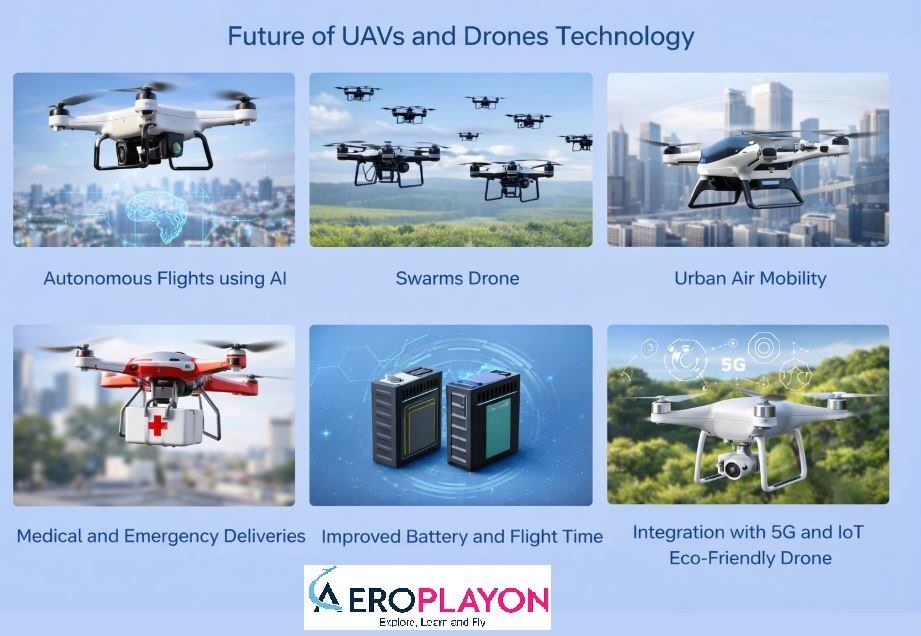
- Autonomous Flights using AI: Drones will become smarter with artificial intelligence, allowing them to fly, detect obstacles, and make decisions without human control.
- Swarms Drone: Multiple drones will work together in a coordinated way — useful for defence missions, search and rescue, or large-scale farming.
- Urban Air Mobility (UAM): Drone taxis and air shuttles could become a reality, helping people travel across cities through the sky, reducing road traffic.
- Medical and Emergency Deliveries: Drones will play a bigger role in delivering emergency medical supplies like blood, vaccines, or medicines to remote or disaster-hit areas.
- Improved Battery and Flight Time: Advancements in battery technology will allow drones to fly longer and cover more distance, making them more efficient for industrial use.
- Integration with 5G and IoT: Faster and more reliable data sharing between drones and control systems will improve real-time tracking, communication, and performance.
- Eco-Friendly Drone: The future will bring lighter, quieter, and more environmentally friendly drones made with sustainable materials and lower emissions.